Vlado Janevski, the Voice That Defined a Generation, Dies at 65
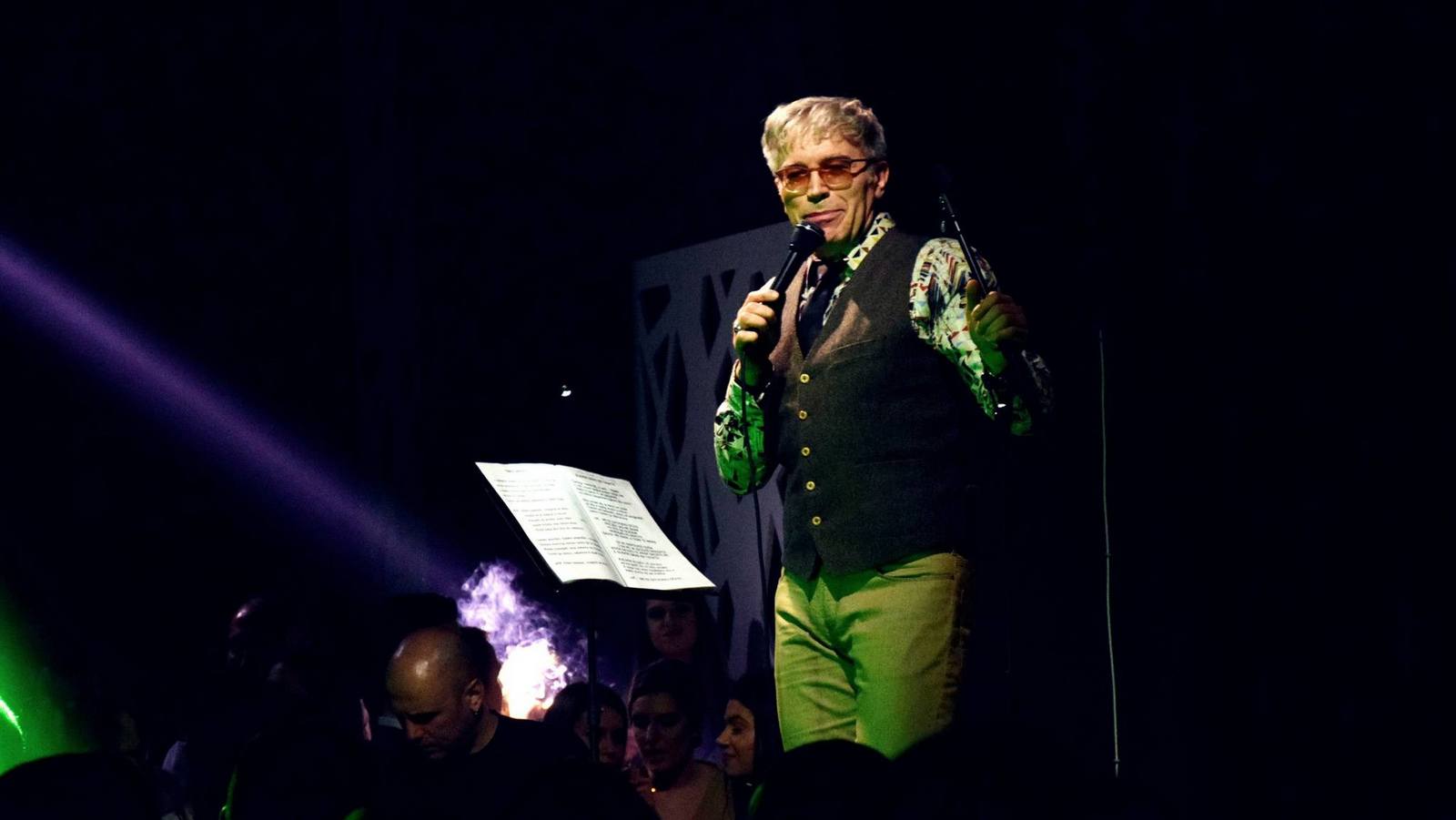
North Macedonia bids farewell to Vlado Janevski, the singer whose ballads became the soundtrack of lives across the region and who was the country's first Eurovision representative.
Skopje, North Macedonia – June 29, 2026: The news arrived quietly on a Monday morning, but its weight was immediately felt across the country. Vlado Janevski, one of North Macedonia's most beloved musical figures, had died at the age of 65 after a short illness. Within hours, social media was flooded with farewell messages. Fellow musicians, public figures, and thousands of ordinary citizens shared their memories, their grief, and their gratitude.
Janevski was not merely a successful singer. He was, for many, a constant presence — a voice that had accompanied them through adolescence, through love and loss, through the ordinary and the extraordinary. His ballads, with their warmth and emotional directness, became part of the fabric of daily life in North Macedonia and beyond. To lose him was to lose a companion, however distant, however unknown.
Born in Skopje in 1960, Janevski came of age in a period of cultural and political transition. He performed with several bands in the 1980s and early 1990s, honing a style that combined the intimacy of the singer-songwriter tradition with the emotional resonance of Balkan folk music. His voice was distinctive — warm, slightly rough around the edges, capable of conveying both vulnerability and strength. It was a voice that listeners trusted.
His breakthrough as a solo artist came in the mid-1990s, and by the end of the decade he had become one of the most recognisable names in Macedonian music. In 1998, he achieved a particular kind of fame: he became the first-ever representative of the newly independent Republic of Macedonia at the Eurovision Song Contest, performing the song 'Ne zori zoro' ('Don't Rise, Dawn'). It was a moment of national pride, a chance for the country to present itself to a continent-wide audience. Janevski carried that responsibility with dignity.
But his legacy extends far beyond that single performance. Over the course of his career, he released six studio albums, producing a string of hits that have endured across generations. Songs like 'Ako ne te sakam' ('If I Don't Love You'), 'Nekogash i negde' ('Sometimes and Somewhere'), and 'Crno tikveshko' ('Black Tikvesh Wine') remain staples of Macedonian popular music. They are songs that parents pass down to their children, that are sung at weddings and celebrations, that are played on radio stations late at night when nostalgia is in the air.
His songwriting was characterised by a certain emotional honesty. Janevski did not write about grand political themes or abstract ideas. He wrote about love, about longing, about home — 'Doma si e doma' ('Home Is Home') is perhaps his most direct statement of this sensibility. He understood that the most universal emotions are often the most personal, and he had a gift for expressing them in a way that felt both intimate and inclusive.
His last public appearance, in March, was a guest performance at a concert by Croatian singer Vesna Pisarovic in Skopje. A month earlier, he had shared the stage with the legendary Serbian musician Momcilo 'Bajaga' Bajagic. These were not farewell performances; they were simply the continuation of a long and productive career. That he was still performing, still connecting with audiences, until so recently makes his loss feel particularly acute.
The tributes that have poured in since his death reflect the depth of the bond he forged with his audience. Fellow musicians have spoken of his generosity, his humility, and his unwavering commitment to his craft. Fans have shared stories of how his songs accompanied them through difficult times, how they found comfort in his voice. It is a testament to the power of popular music, at its best, to create a sense of community across distance and difference.
North Macedonia has lost a cultural figure of rare significance. But Janevski's music, like all great popular art, will outlive him. The songs remain, and they will continue to be sung, to be remembered, to be passed on. That, in the end, is the most enduring tribute any artist can receive.
← Back to home