Serbian Hospitality vs Spanish Sobremesa: More Alike Than You Think
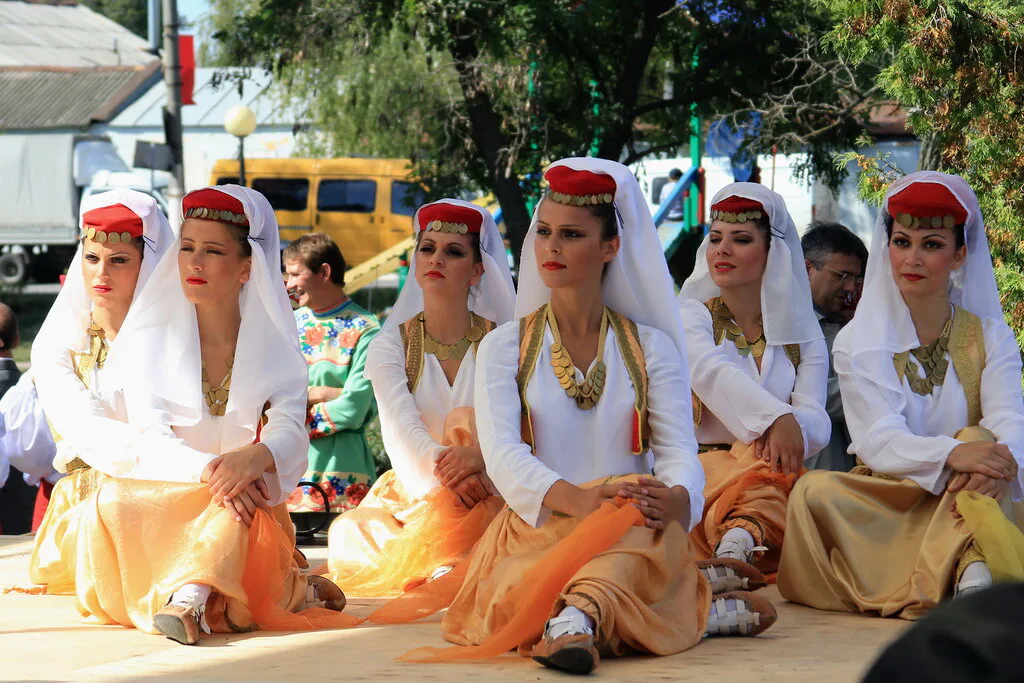
At opposite ends of the European continent, Serbia and Spain share a cultural cornerstone: the sacred, unhurried art of gathering around a table, proving that human connection still outpaces modern efficiency.
Geographically, over two thousand kilometers and the entire Italian peninsula separate Madrid from Belgrade. On paper, one is a Mediterranean gateway defined by Western European rhythms; the other is a Balkan crossroads shaped by complex historical currents, geopolitical scars, and a constant state of transition. Yet, step inside a traditional Serbian kafana or pull up a chair at a bustling Spanish taberna, and the superficiality of these cartographic borders immediately dissolves into a shared, profound, and inherently subversive philosophy of life: the absolute refusal to rush the human experience.
In a Europe increasingly obsessed with time optimization and performance metrics, this cultural resistance is not a mere geographical quirk or a postcard cliché; it is an act of social preservation. In Spain, this philosophy is perfectly codified as the 'sobremesa'—that sacred, post-meal ritual where conversation stretches for hours over empty plates, half-filled glasses, and lingering coffee. The sobremesa is not a simple break in the workday; it is an implicit cultural refusal to view dining as a purely biological transaction or a corporate networking opportunity. It is about inhabiting time, not consuming it.
Across the continent, the Serbians practice their own version of this existential slow-down through 'gostoprimstvo' (hospitality). Outside observers frequently reduce Balkan culture to its political intensity or historical resilience, ignoring the profound sophistication of its social fabric. To be a guest in a Serbian home or tavern is to enter a jurisdiction where time bends, class boundaries vanish, and the menu serves merely as the opening chapter of a long, unpredictable, and visceral dialogue.
The specific parallels between these dynamics reveal an almost identical collective psychology regarding public spaces. Both cultures possess a near-genetic aversion to the 'quick check'—a waiter bringing the bill unprompted is considered a subtle declaration of hostility, as the table is an acquired right, not a temporary rental. In Belgrade, a mid-afternoon coffee meant to last thirty minutes routinely evolves into a full dinner accompanied by rakija and live tamburaši music. In València or Seville, a casual Friday lunch transforms seamlessly into late-night tapas. Both societies operate under the premise that collective presence is an absolute priority over individual productivity.
This shared ethos is rooted in something far deeper than just a love for good food or favorable weather. It functions, fundamentally, as a defense mechanism against the hyper-efficiency of globalized capitalism. In an era dominated by rapid digitization, transactional interactions, and the isolation of screens, both the Spanish sobremesa and Serbian hospitality act as vital, living analog sanctuaries. They are spaces where vulnerability is welcomed, storytelling remains a high-status art, and the individual is temporarily dissolved into the group.
As European financial capitals continuously push toward a homogenized model of hyper-productivity, commuter cities, and fifteen-minute desk lunches, these Mediterranean and Balkan traditions offer a beautiful, stubborn, and deeply human alternative. They remind us that the truest measure of a society's wealth is not found in its economic output or institutional reforms, but in the time its people are willing to gift one another without expecting anything in return. Whether over a glass of Rioja or a shot of šljivovica, the underlying message is identical: life is not meant to be managed or optimized; it is meant to be shared.
← Back to home
