Novi Sad: Serbia's Second City That Deserves Your Attention
Beyond Belgrade lies Novi Sad, Serbia's elegant second city. From the Petrovaradin fortress to the Danube promenade, here's why Spanish travelers should add it to their Serbia itinerary.
NOVI SAD — Some cities you visit. Others you inhabit. Novi Sad belongs to the second category. Fifty minutes by high-speed train from Belgrade, Serbia's second city is overlooked by most tourists. And that's precisely why it's worth discovering.
For Spaniards planning a trip to Serbia, Belgrade is the obvious destination. But those who take the time to cross the Danube northward discover a city of unhurried rhythm, Austro-Hungarian architecture, and a quality of life that invites you to stay. This Serbia travel guide from Spain wouldn't be complete without a chapter on Novi Sad.
Novi Sad is the country's second city, but it doesn't feel like one. It lacks Belgrade's frantic energy and the historical weight of other Balkan capitals. It has something else: quiet elegance, tranquil pride, and the certainty that whoever arrives, stays.
How to get to Novi Sad from Belgrade
The high-speed train connecting Belgrade and Novi Sad is one of Serbia's newest infrastructure projects, partly funded by the European Union. The journey takes just 50 minutes. It's as punctual as a Swiss train and as clean as a German one. Once at the station, the center is a ten-minute walk away.
You can also drive via the A1 highway, which links the capital with the Hungarian border. The route is comfortable and direct, and worthwhile for those wanting to combine Novi Sad with the Fruška Gora monasteries or continue toward Subotica and the Hungarian border.
What to see in Novi Sad: the fortress that was never taken
The Petrovaradin Fortress is the city's symbol and one of Europe's most impressive military complexes. The Austrians built it between the 17th and 18th centuries on the right bank of the Danube. They say it was never conquered, and looking at its stone walls, you believe it.
What surprises visitors isn't just its size — it covers 112 hectares — but its ability to combine the military with the everyday. Its corridors house artists' studios, craft workshops, and restaurants serving local specialties. In summer, the Exit Festival transforms its moats and bastions into one of Europe's most important music festivals.
From the top of the bastion, the Danube looks like a lake. You can see the old city on the other side, with its red roofs and church towers. It's the same river that flows through ten countries, but here it has a different name. Here it's the Dunav.
The clock tower has a peculiarity that confuses newcomers: the hands are reversed. The large hand marks the hours and the small one the minutes. The reason is practical: Danube fishermen needed to see the time from afar, and the large hand was easier to spot. Today, it's one of the city's symbols.
The center: a pedestrian street that never ends
The heart of Novi Sad is Zmaj Jovina Street, a pedestrian thoroughfare several kilometers long that crosses the historic center. It's full of cafes, shops, and pastry shops. People stroll. They sit. They watch time pass without haste.
Unlike Belgrade, where the pace is dizzying, Novi Sad invites you to pause. The terraces are always full — in spring, summer, even autumn with blankets — and waiters aren't in a hurry to bring the bill. If anything defines this city, it's its rejection of haste.
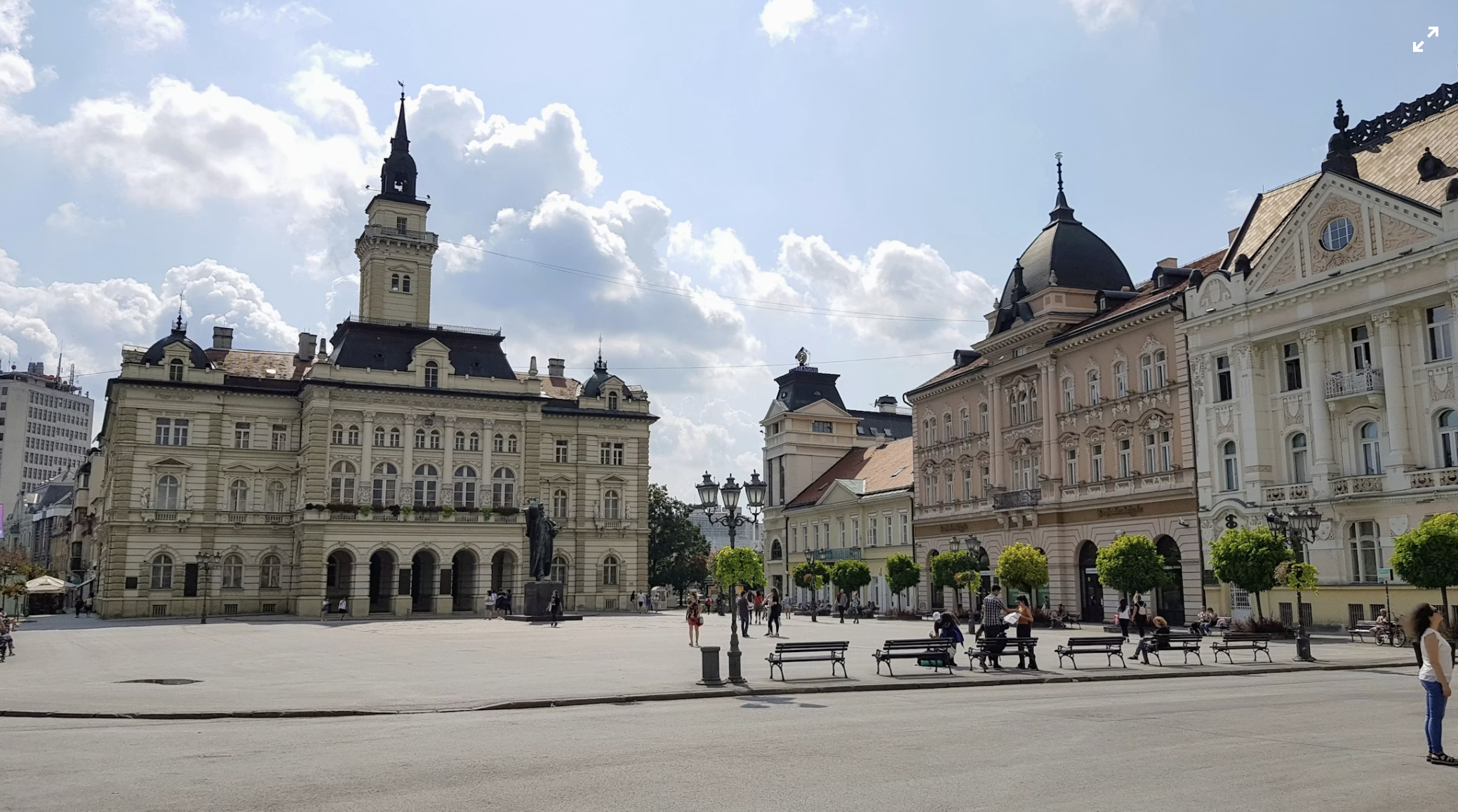
Liberty Square is the nerve center. It's presided over by the Town Hall and the Catholic Church of the Name of Mary, with its 72-meter tower. The buildings are neo-Renaissance and Baroque, a legacy of the time when Novi Sad was part of the Austro-Hungarian Empire.
A few steps away is the synagogue, which survived World War II and now functions as a cultural space. It's a reminder that Novi Sad was, for centuries, a city of multiple cultures and religions. It still is.
The Danube promenade: the river as a border
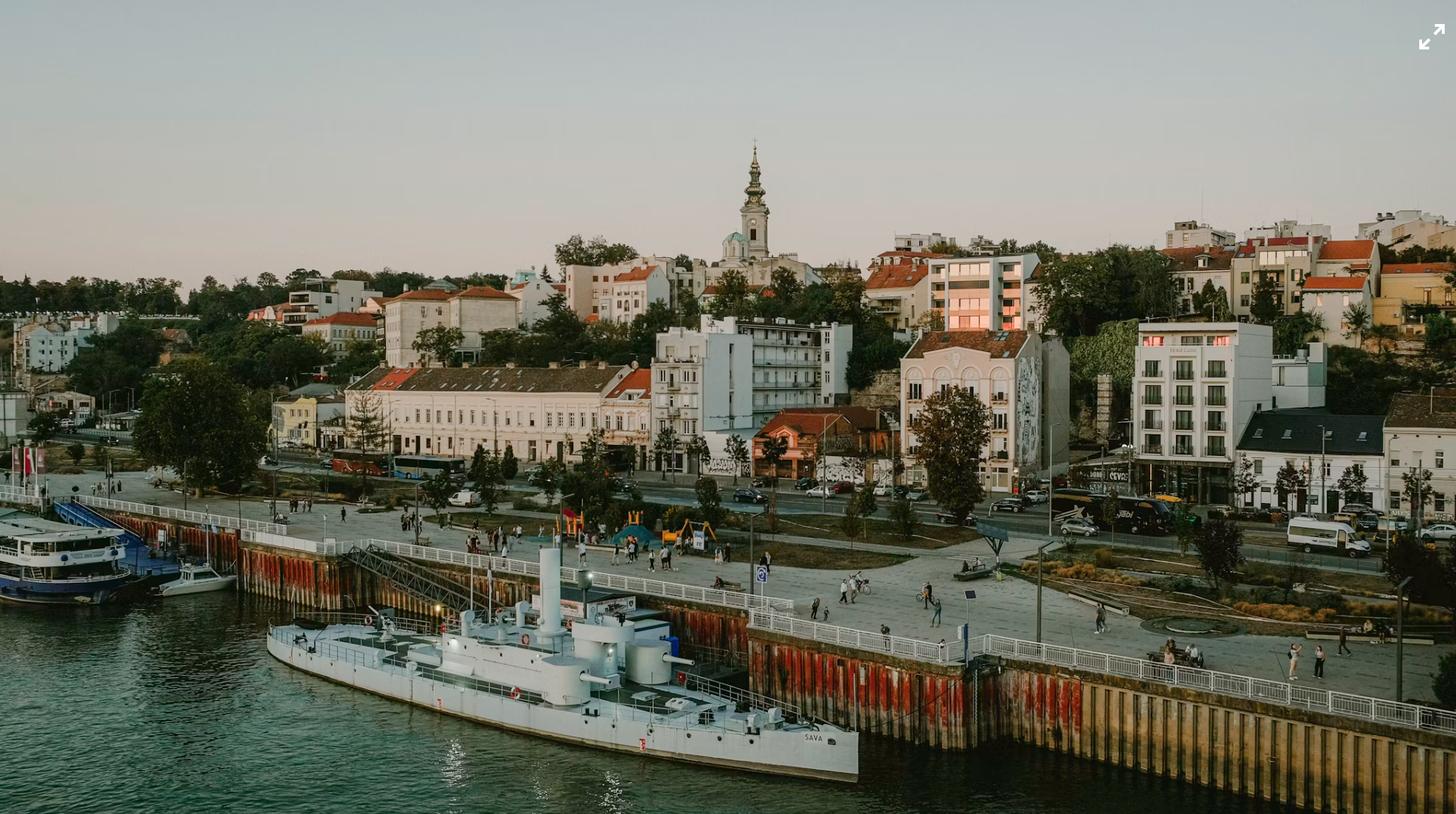
The Danube doesn't just divide Novi Sad from the fortress. It's also the natural boundary with the Petrovaradin district. Walking along the riverside promenade is one of the city's most pleasant experiences. On one side is the river, wide and slow; on the other, the floating bars — splavovi — that fill with music and young people in summer.
The Liberty Bridge, which connects the two banks, was rebuilt after the 1999 bombings. It's a symbol of the city's ability to rise up, to move forward. Serbians have a word for that: inat. It's that mixture of stubbornness, pride, and resistance that defines the whole country.
Why Novi Sad is the destination nobody visits and everyone should
Unlike Belgrade, which has attracted investment and international tourism, Novi Sad has remained in the background. No tourist hordes. No souvenir shops on every corner. No queues to enter museums. That's precisely its advantage.
The Spanish traveler seeking something authentic, who has visited Prague and Vienna and no longer wants to take photos of fairy-tale castles, finds in Novi Sad a real city. Alive. With inhabitants who speak Serbian, English, and in some cases Hungarian. With a cultural life designed not for tourists but for those who live there.
In 2022, Novi Sad was the European Capital of Culture. It wasn't an empty title. The city took the opportunity to renovate its infrastructure, open new cultural spaces, and remind Europe it exists. The legacy of that year is visible: museums, galleries, film and jazz festivals that attract visitors from across the region.
Novi Sad for Spaniards: a city of familiar rhythms
For those traveling to Serbia from Spain, Novi Sad offers an additional advantage: its pace of life feels familiar. It's a Mediterranean city in the heart of the Balkans. People eat late, dine even later, and conversation is an end in itself.
Local cuisine combines Hungarian and Serbian influences. Goulash is hearty, smoked sausages are excellent, and the wine from the Fruška Gora region is worth a visit. A dinner for two at a restaurant in the center costs between 25 and 35 euros, including wine.
The city is an hour from Belgrade, but it feels much farther. And closer. Like all places worth discovering.
The trip to Serbia begins in Belgrade. But it shouldn't end there. Novi Sad awaits, 50 minutes away, with its undefeated fortress, its wide river, and its certainty that whoever arrives, stays. And almost never regrets it.
*Note: this trip was made in July 2026. Prices are approximate and the high-speed train runs with Swiss punctuality.*
← Back to home