Serbia Travel Guide: 7-Day Road Trip Through the Heart of the Balkans
Discover why tourism in Serbia is booming with this complete 7-day road trip guide. From Belgrade's fortress to the Uvac canyon, explore the best places to visit in Serbia.
BELGRADE — The first time a Spaniard looks at a map of Serbia, they usually ask the same question: why isn't there a beach? For decades we've measured destinations by kilometers of coastline, the color of the water, whether the resort has a buffet. Serbia has none of that. It has the Danube, which isn't a beach but is wide as a sea, and it has a history that doesn't let you breathe.
But more and more people want to travel to Serbia. Not to lie in the sun, but to understand why this landlocked country, with its backpack full of recent wars, is receiving more direct flights from Madrid and Barcelona. The numbers don't lie: 34% more Spaniards in 2025 than the previous year. The question is no longer why Serbia, but why we haven't looked here before.
This is a Serbia travel guide from Spain for those who want to go beyond the tourist brochure. Seven days. No tricks. No guide. Feet on the ground and one initial warning: forget Spanish schedules. Here dinner starts at nine, but the party ends when the sun rises over the Sava.
How to travel to Serbia from Spain: what you need to know
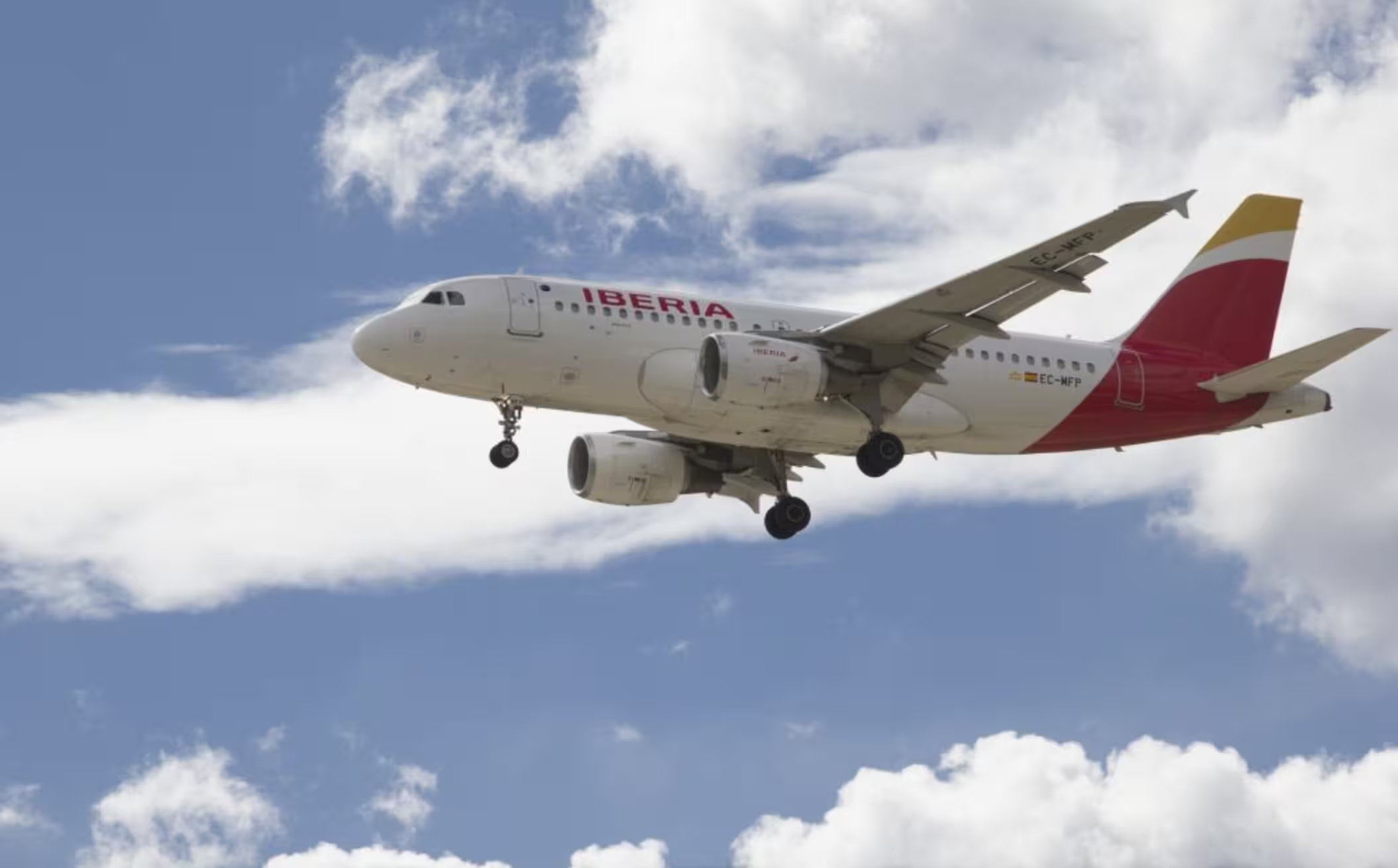
Direct flights: Air Serbia connects Madrid and Barcelona with Belgrade in just over three hours. No layovers in London or Frankfurt. Nikola Tesla Airport is small, functional, without the chaos of Barajas. In half an hour you're in the center.
Visa: None. With a Spanish ID or passport you enter without paperwork.
Currency: The Serbian dinar (RSD). Exchange only what you need at the airport to get to the center; better rates are available at exchange offices in the city.
Language: Serbian uses both Cyrillic and Latin alphabets. In Belgrade, English is spoken in hotels and restaurants, but in small towns a translator app helps. And one essential word: hvala (thank you).
Day 1. What to see in Belgrade: the city that has died 40 times and is still standing
The Air Serbia flight lands at Nikola Tesla at eleven in the morning. Your first impression is that this isn't Prague or Vienna, even though the Austrians left their mark here.
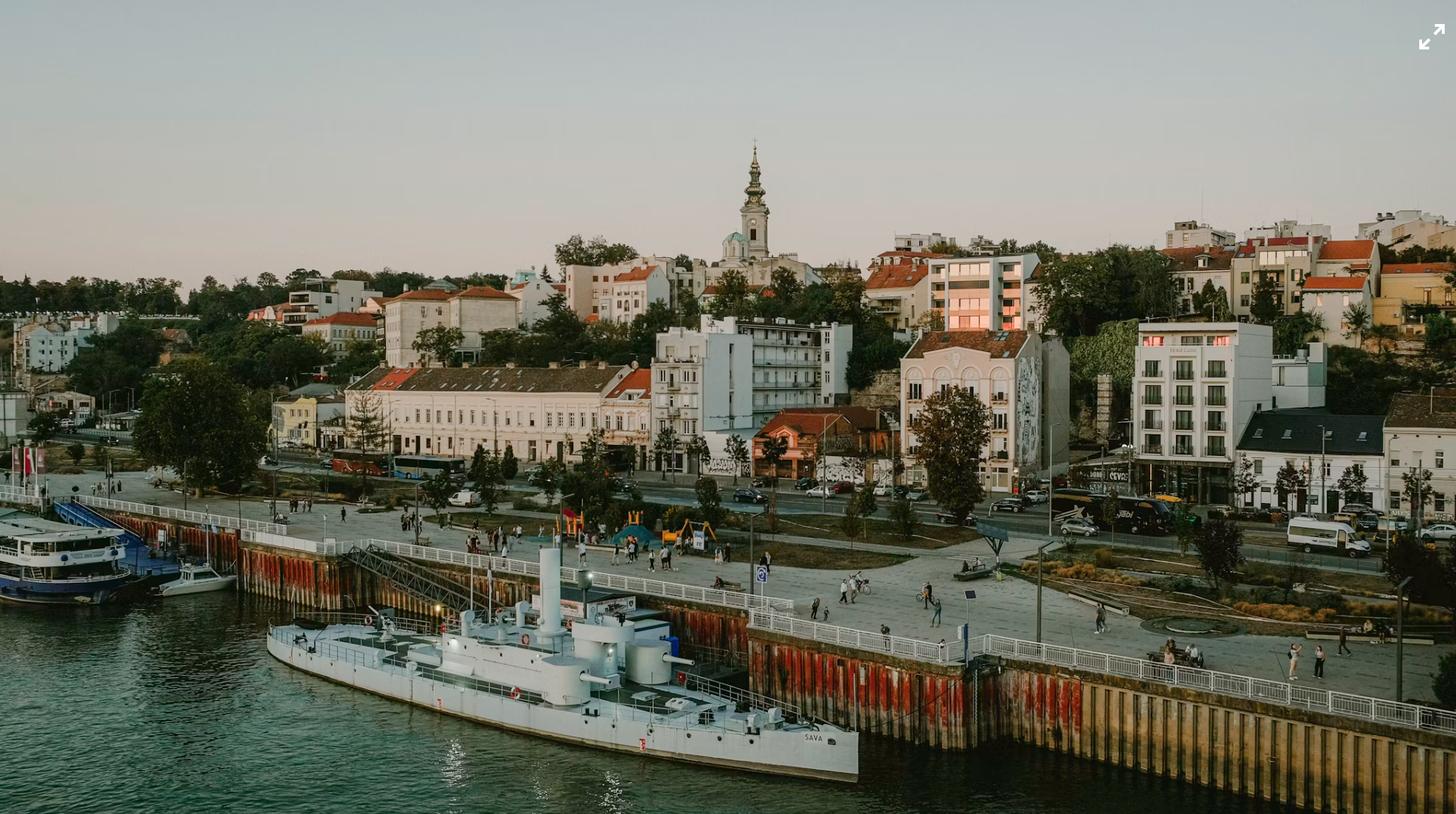
Kalemegdan isn't a fairy-tale castle. It's a jumble of Roman, Ottoman, and Austro-Hungarian walls overlooking the river. From the viewpoint, the Danube widens and the Sava crashes into it. Here generals from half the empires have looked at the horizon wondering if the enemy would come from the north or the south. Spoiler: it always came.
The city below is noisy, full of terraces where people smoke without inhibition and drink rakija like water. Rakija is the fruit brandy they offer you in every home, every tavern, every farewell. Serbians don't ask if you want some, they ask plum or apricot?
At night, Skadarlija is a labyrinth of cobblestones and gas lamps. The kafanas — the traditional taverns — have wooden tables, checkered tablecloths, and musicians playing songs of love and war without distinguishing one from the other. You order ćevapi (grilled minced meat, sacred here) and pay 12 euros for two people. With wine. It's the first time you realize your budget is going to last.
Day 2. The temple, the marshal, and the neighborhood that looks like another country
St. Sava is a white mass visible from any point in Belgrade. It's the largest Orthodox church in the Balkans, and inside it looks like a cathedral that still hasn't woken up. Mosaics cover the walls with big-eyed saints, and there's a silence you won't find in a mosque or a Catholic cathedral. It's a Serbian silence: dense, historical, weighty.
Then comes the Museum of Yugoslavia. Here lies Tito's tomb, and people still bring flowers. It's not nostalgia, or not only. It's the feeling that that Yugoslavia, with all its contradictions, was an experiment that ended too soon. The Youth Torches, the gifts from Castro and Gaddafi, the pioneers' command staff... It's a museum that is both kitsch and overwhelming.
In the afternoon you cross the Danube to Zemun. Zemun doesn't look like Belgrade. Narrow streets, low houses, a medieval tower the Hungarians built to watch the river. Here time stops. You sit at a bar by the dock, order a beer (Jelen is what everyone drinks) and watch the cargo ships pass. You think about the Danube, how it crosses ten countries and each gives it a different name. Here they call it Dunav.
Day 3. Novi Sad: when the Austrians built well
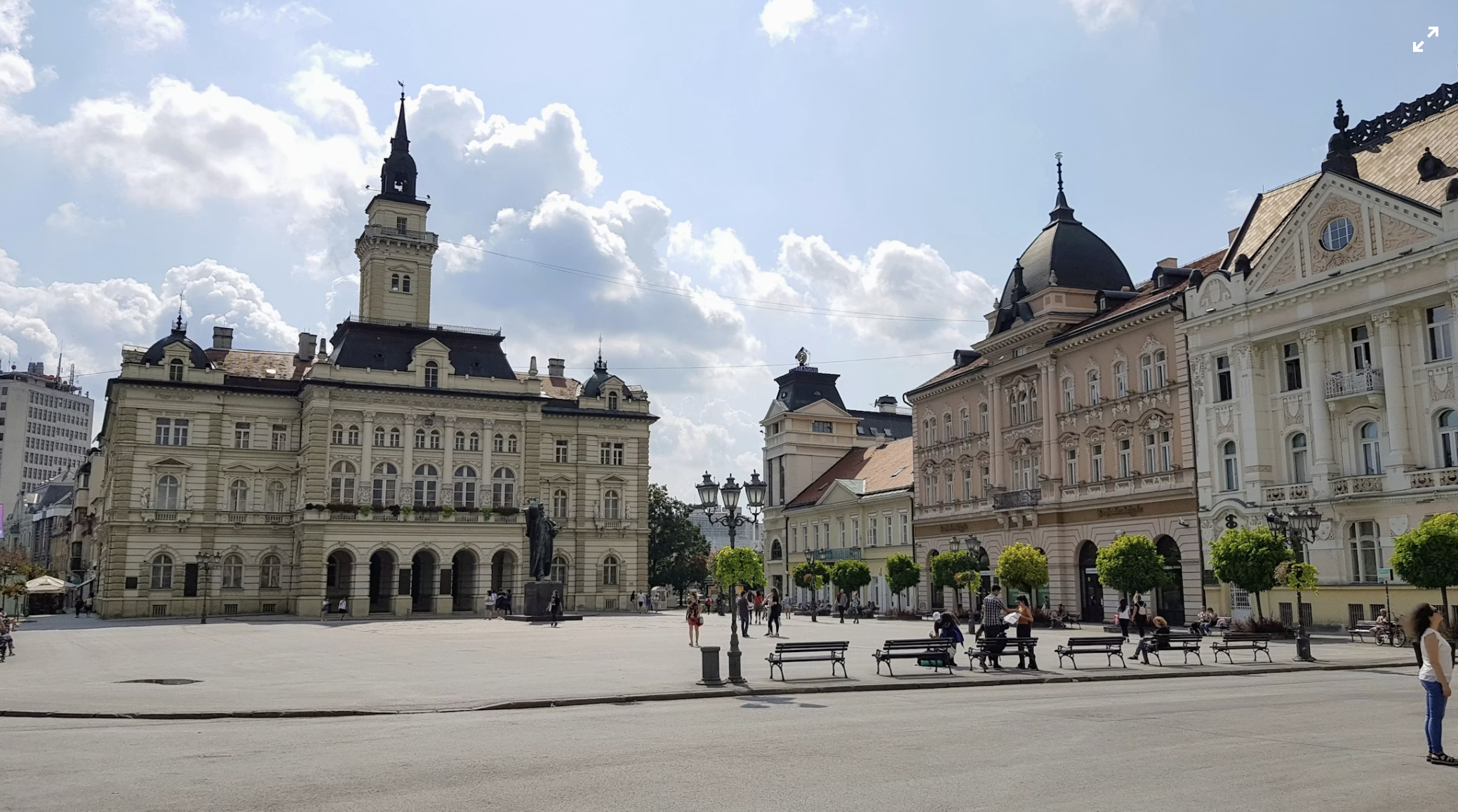
Fifty minutes by high-speed train from Belgrade is Novi Sad, Serbia's second city. The station is new, shiny, partly funded by the EU. It's the first contrast: Belgrade is chaos and energy; Novi Sad is order and elegance.
The Petrovaradin Fortress, on the other side of the river, is a stone beast. The Austrians built it over almost a century with forced labor. They say it was never taken. And it has a clock on the tower with the hands reversed — the big one marks the hours, the small one the minutes — because the Danube fishermen needed to see the time from afar. Now they use it for selfies.
What the guides don't tell you is that beneath the fortress there are 16 kilometers of tunnels. Dark, damp passages where gunpowder and provisions were stored. Today, the Exit Festival turns all of this into an electronic music stage. In July, the same tunnels that defended the empire sound like techno.
Novi Sad has something of a sleepy city, but being Serbia's second city shows. People walk along the pedestrian street, the terraces are full, and for the first time on the trip you hear more Serbian than English. International tourism hasn't yet massified here, and you appreciate it.
Day 4. The heart of stone: the monasteries that nobody visits
You rent a car in Belgrade and drive south. Three hours of road, first highway and then mountain roads that narrow between beech forests.
Studenica appears suddenly, in the middle of a valley, as if the monks had chosen the most inaccessible site on purpose. Founded in 1196 by Stefan Nemanja, the king who unified Serbia. The church is white marble, and the 13th-century frescoes are intact. The Crucifixion on the north wall has a blue that isn't found anywhere else in Europe. The guide, a young monk with a beard and glasses, explains that the pigment came from lapis lazuli from Afghanistan. The Serbian Empire reached far.
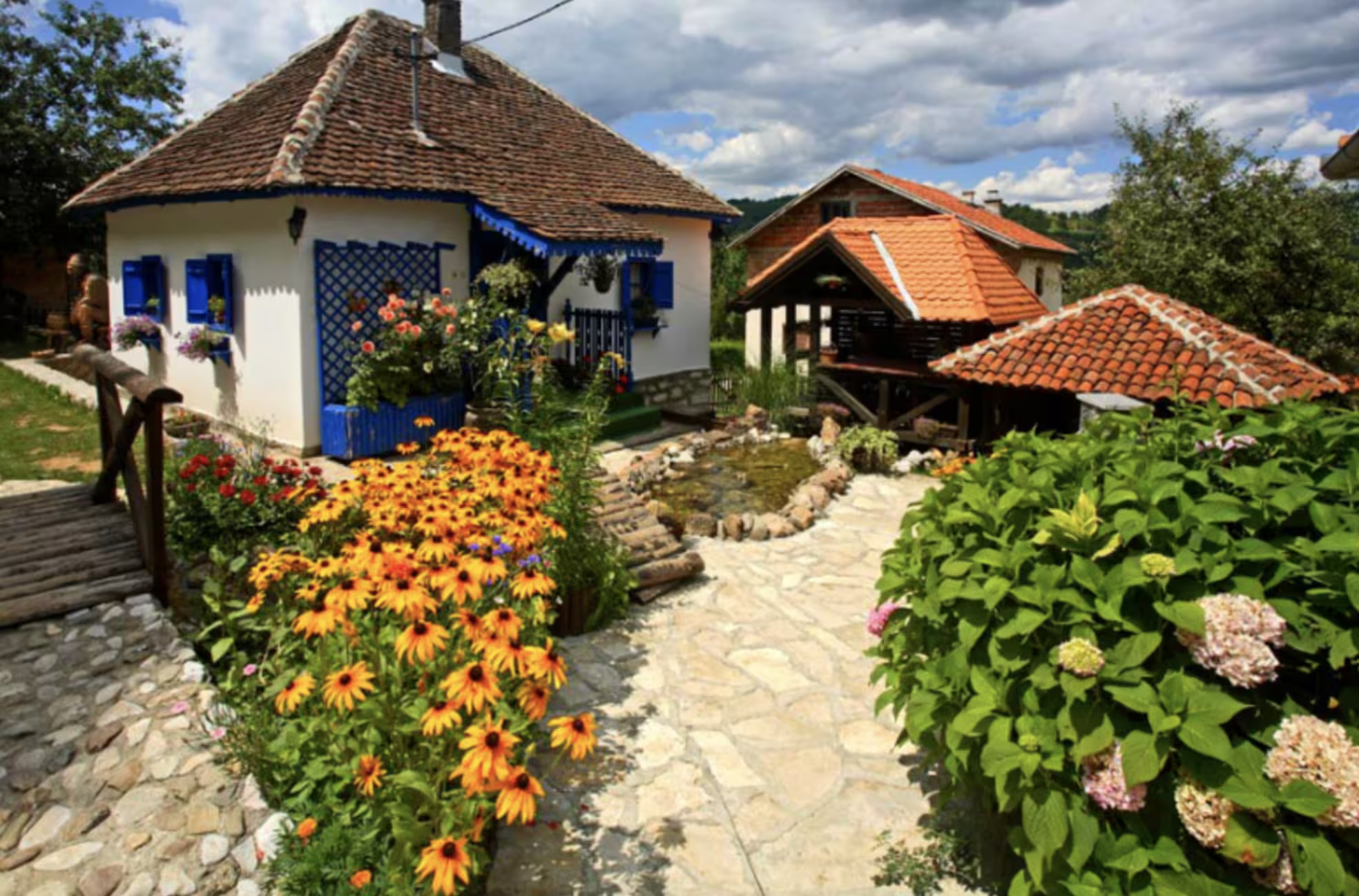
A few kilometers away, Žiča. This is where kings were crowned. The walls are an intense red that legend says is blood, but it's actually local iron oxide. The monastery is active. Nuns sweep the courtyard, a black cat sleeps in the sun, and there's a peace so absolute that your phone loses signal.
You return to the car at night. The road has no light, just your headlights and the stars. You arrive at Vrnjačka Banja, the most famous spa in Serbia, and realize you've been driving without looking at the clock. Nobody here is in a hurry.
Day 5. Uvac: the canyon that isn't on Instagram (yet)
This is the day that justifies the trip. The Uvac canyon is a 2,500-meter gash in the earth of meanders, a water serpent twisting between limestone cliffs. There's no direct road; you get there by dirt paths and signs that seem more like advice than directions.
The Molitva viewpoint is at 800 meters altitude. From above, the river draws an impossible curve. The boatman takes you through the bottom of the canyon, and as you go you see griffon vultures soaring over the walls. It's the largest colony in the Balkans. They're large animals, two meters in wingspan, that let themselves be seen effortlessly.
The ice cave, inside the canyon, has stalactites hanging like fangs. The boatman turns off the flashlight and you're left in absolute silence. You hear nothing. No car, no plane, no motorcycle. Just the dripping of water on stone.
Back at the car, you come across a shepherd and his flock. No tourists. No souvenir stand. This is Serbia unfiltered.
Day 6. Zlatibor and the train of eight curves
Zlatibor is the plateau where Serbians go to breathe fresh air. It's where they flee from Belgrade's heat. But the destination here isn't the plateau, but Mokra Gora, half an hour away.
The Šargan Eight train is a relic. It was built between 1916 and 1925 to connect Serbia with Bosnia, and it goes up the mountain in a figure-eight because there was no space for a straight track. The journey takes two hours, passes through 22 tunnels and 10 bridges, and each curve opens a different view of the valley. The carriages are wooden and smell of coal.
At the end of the journey, Emir Kusturica built Drvengrad, a wooden village made for his film Life Is a Miracle. It's a movie theme park, with streets named after his actors and a tiny church. It's kitsch, artificial, but it works. Because in the middle of wild nature, this film director's whim reminds you that the Balkans are also surrealism.
Day 7. Return to Belgrade via Topola
On the last morning, heading back to the capital, you stop in Topola. Here is the Church of St. George, the mausoleum of the Karađorđević royal dynasty. It's a white church with mosaics covering every inch of the dome. Serbian kings sleep here, in marble silence.
The road back to Belgrade is straight and boring. You take the chance to take stock. You've traveled the country from north to south, seen three empires, eaten grilled meat until you burst, and paid 30 euros for dinners that would cost double in Madrid.
And you realize that the question isn't why there's no beach. The question is why we haven't looked here before.
Serbia for Spaniards: why this trip will change your perspective
Spain and Serbia have more in common than it seems. Both are countries of late rhythms, of long conversations, of stews that cook over low heat. The Serb is as distrustful as the Castilian and as hospitable as the Andalusian. The difference is that Serbia has spent 25 years rebuilding from war, and Spain has spent 50 years of democracy.
But tourism doesn't understand politics. What's happening now, with direct flights and growing interest, is that Spaniards are discovering that the Balkans aren't that gray and dangerous place the 90s news sold them. It's a place of lights, wide rivers, golden monasteries, and people who smile after having lost everything.
The Balkan Chronicle wants to keep telling this story. Not from the office, but from the road. Because bridges aren't built with steel, they're built with plane tickets and a desire to understand each other.
*Note: this trip was made in May 2026. Prices are approximate and roads, unless otherwise noted, are in better condition than you imagine. Bring cash, because in the villages the card machine is still a rumor.*
← Back to home