Spain Reaffirms Support for Serbia's EU Path and Its Position on Kosovo
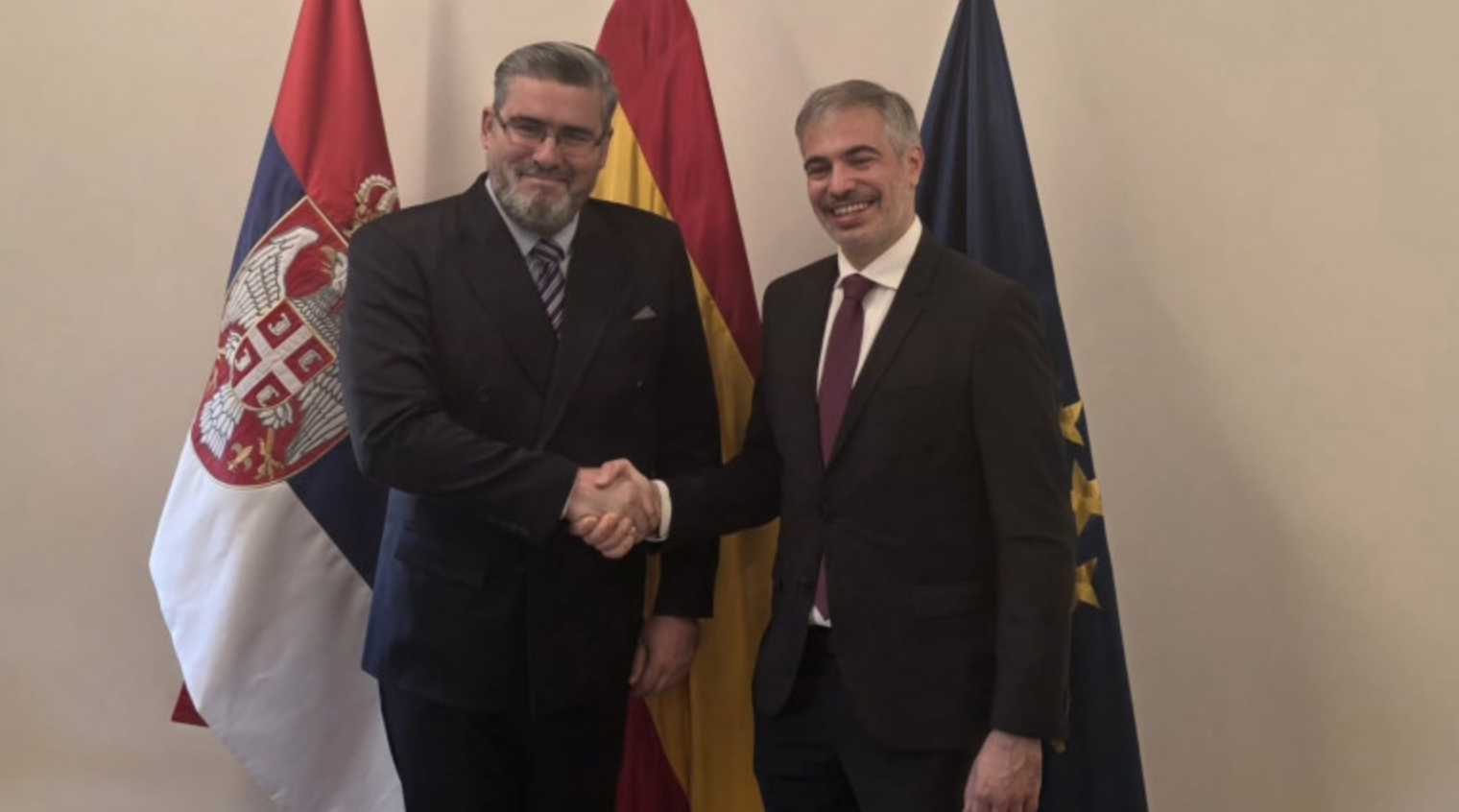
Serbian Minister Nemanja Starović met with Spanish State Secretary Fernando Sampedro in Madrid, securing reaffirmation of Spain's support for Serbia's EU accession and its position that Kosovo remains part of Serbia. The removal of Ustasha symbols from a WWII grave in Valencia was also discussed.
MADRID — Serbia has a firm ally in Spain. Serbian Minister of European Integration Nemanja Starović met on Wednesday in Madrid with Spain's State Secretary for the European Union, Fernando Sampedro, in a meeting that reaffirmed Spanish support for Serbia's EU accession process and, once again, its position against recognizing Kosovo.
Starović thanked Sampedro for the "continued support that Spain provides to Serbia on its path to EU membership," according to a statement from the Serbian government. During the conversation, the importance of opening Cluster 3 in the accession negotiations was highlighted to "valorize the results of the reform processes implemented in Serbia."
Sampedro emphasized that "the Kingdom of Spain remains firmly in its position of respecting the territorial integrity of internationally recognized states and, in this sense, treats Kosovo and Metohija exclusively as part of the Republic of Serbia."
Spain is one of the EU countries that does not recognize Kosovo's independence. Its position is based on the principle that unilateral secession without agreement between the parties or a UN Security Council resolution sets a dangerous precedent.
The mention of Cluster 3 is not coincidental. Although the European Commission has recommended its opening, consensus among the 27 member states remains fragile. According to diplomatic sources, seven countries — including the Baltics, the Netherlands, and Croatia — are currently blocking progress, demanding greater advances in the rule of law and greater alignment of Serbia's foreign policy with the EU. Spain, in this context, clearly supports Serbia's progress.
Starović also met with Spain's Minister of Territorial Policy and Democratic Memory, Ángel Víctor Torres Pérez. He thanked Torres for the removal of Ustasha symbols from the grave of Vjekoslav Maks Luburić, the commander of the Jasenovac concentration camp during World War II, in the Valencian town of Carcaixent.
Both agreed that "preserving the historical memory of Nazi crimes during World War II is a civilizational obligation and that any glorification of criminals from that period is unacceptable in contemporary Europe and the world."
The Madrid meeting was not an announcement of new policies. It was a confirmation of a consistent alignment that, on the Balkan chessboard, holds strategic value for both countries.
← Back to home