Macedonian Film '17' Keeps Winning — and It's Not Hard to See Why
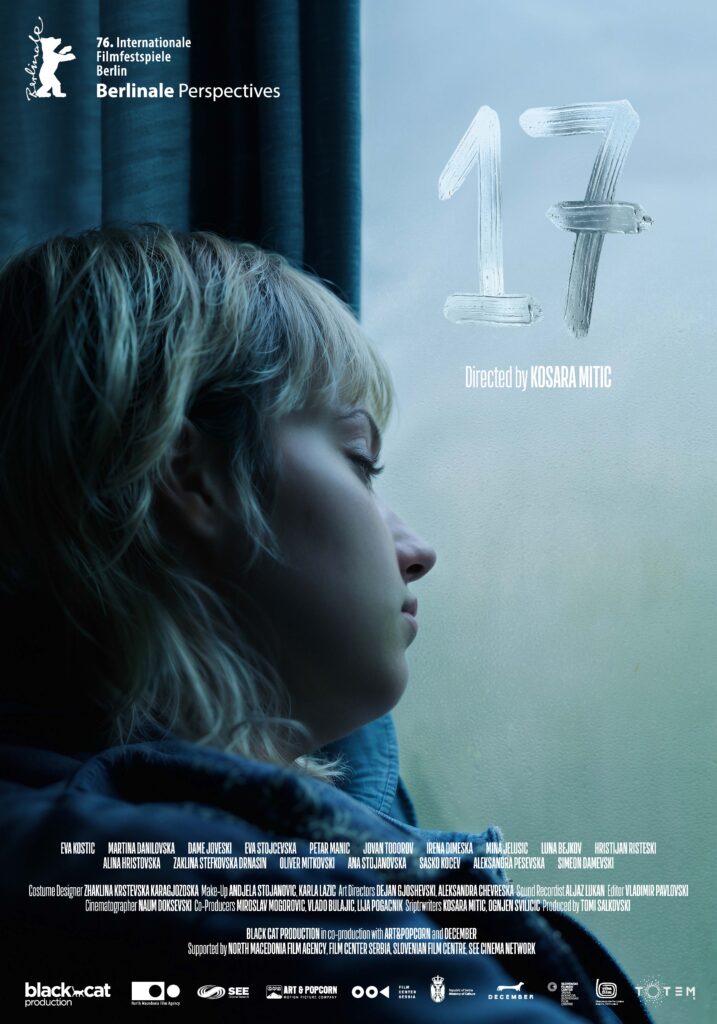
Kosara Mitić's debut feature about teenage silence and violence just won Best International Debut in Jerusalem. It's the first Macedonian film in 26 years to compete in Berlin's official program.
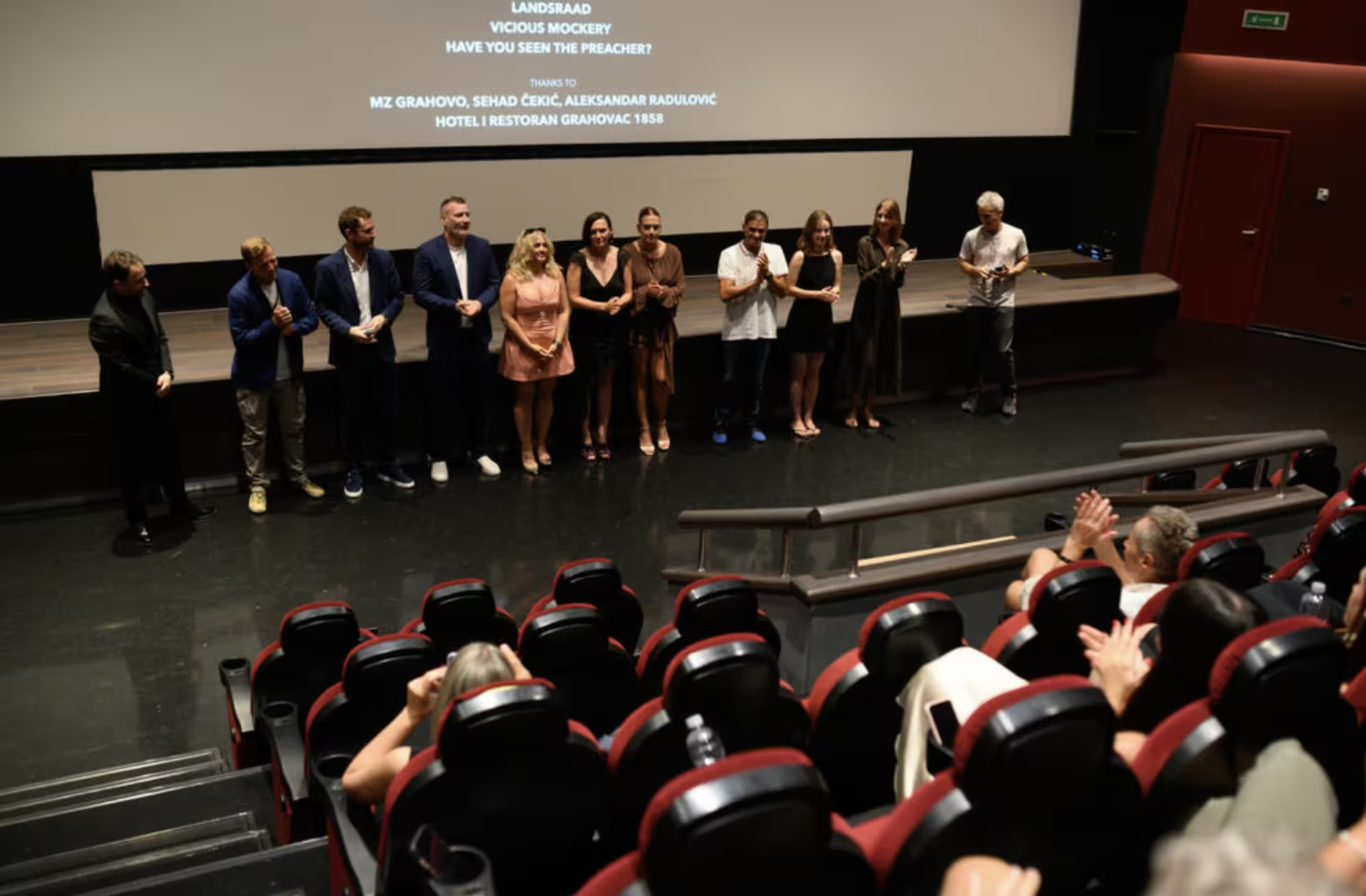
The international jury at the 43rd Jerusalem Film Festival didn't mince words. They called Kosara Mitić's debut feature '17' a cruel, uncompromising and powerful artistic blow — a film filled with anger and exceptionally skilled cinematography, led by an incredibly talented director and outstanding acting.
On July 16, '17' won the GWFF Award for Best International Debut Film at one of the world's most respected festivals. The win adds to a journey that already includes a world premiere in the official competition program of the 76th Berlin International Film Festival — making it the first Macedonian debut feature in 26 years to compete in the official program of Berlin, Cannes, or Venice.
What the film is actually about
On the surface, it's simple: 17-year-old Sara is on a school trip, hiding a secret. When the trip spirals out of control and she witnesses a classmate being sexually assaulted, she and the girl form a bond that will last forever.
But Mitić isn't interested in sensationalizing trauma. She wanted to show how violence affects young women especially. That's how violence exists in the lives of young women: without consequences, without language. It's very normalised and very casual.
The film came from months of interviews with teenagers — students from drama and art schools, 16, 17, and 18 years old. They told Mitić stories about violence, sex, their parents. Some were pregnant and hiding it. What she heard was more dangerous than what she was writing, she realized, because they weren't even conscious of it. They'd normalized it. Everything is seen as very natural, and we live in a very patriarchal society.
Why it works
The camera stays close to Sara — at eye level, sometimes behind her. You see what she sees, know what she knows. There's no easy closure, no moral lesson handed to you. The ending is about Sara's transformation: she takes moral responsibility for what happened. Nobody else in the film does that — not the teachers, not the kids, not their parents. The teachers are passive observers who choose not to see.
The film is a Macedonian-Serbian-Slovenian co-production, supported by the Film Agency of North Macedonia, the Film Center of Serbia, and the Slovenian Film Center. It was produced by Skopje's Crna Mačka Produkcija, the same company behind Hive — which won the Grand Jury Prize at Sundance in 2021 and made Kosovo's Oscar shortlist. International sales are handled by Paris-based Totem Films.
What this means for Macedonian cinema
This isn't just a good review. It's a statement. A film from North Macedonia — a country of 1.8 million people — just won a major award in Jerusalem after premiering in Berlin. The last time a Macedonian debut made it into the official program of a top-three world festival was 26 years ago. That's a generation.
Mitić is already working on her next feature. She told The Hollywood Reporter that it will explore the emotional violence of silence against women — the things left unsaid, the complicity of those who look away. She's developing it carefully, aiming to give the story honesty, depth and respect without exploiting trauma.
The cast includes Eva Kostić and Martina Danilovska in the lead roles, with an ensemble of young Macedonian actors. The film is inspired by a real event that shocked the public — but Mitić doesn't name it. She doesn't have to. The silence is the point.
← Back to home