A Montenegrin Thriller Just Premiered at Pula. Here's Why It Matters.
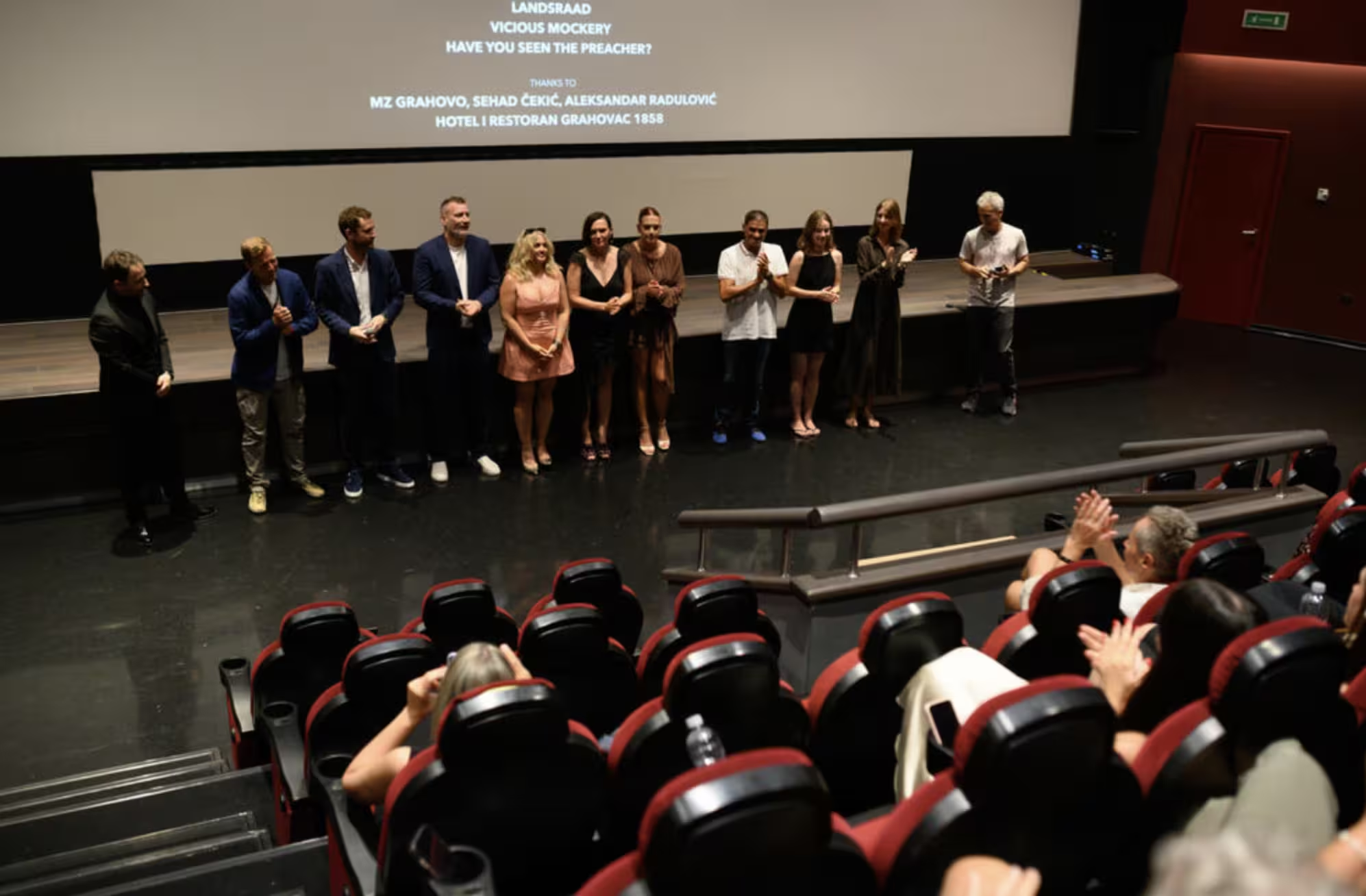
Bojan Stijović's The Black Trumpet, shot entirely in the remote Grahovo region, is part of a quiet resurgence in Montenegrin cinema.
PULA — The 73rd Pula Film Festival has never been a place for polite, festival-friendly cinema. It's an old festival, founded in 1954, and it carries the weight of a region that used to share a country. The audience here doesn't need a translator; they already know the silences between the lines.
Bojan Stijović's The Black Trumpet fits that space perfectly. The thriller, which already premiered in Bishkek, Kyrgyzstan, made its European debut in Pula. It follows Maksim Grahovac, a successful writer who returns to his hometown after a decade abroad. The visit to his brother Niko to settle an inheritance becomes a collision with the past.
Stefan Bošković, the screenwriter, actor and co-producer, calls it "a thriller with dark humor and family drama elements." The cast is led by Momčilo Otašević and Marko Janketić, two faces familiar to anyone who follows regional cinema. They're joined by Milica Janevski, Strahinja Bubanja, and a roster of Montenegrin and Serbian actors.
What makes The Black Trumpet notable isn't just the story. It's how it was made. The entire shoot took place in the Grahovo area, using locations, objects, and props found in the actual places where the story is set. The film breathes its landscape.
The timing matters. Montenegro is celebrating the 20th anniversary of its independence in 2026, and its film sector is having a moment. The Film Center of Montenegro co-financed the project alongside the Film Center of Serbia and RTCG. At the same time, the Cinehill Festival in Croatia has named Montenegro its guest country this year, calling it "the new star of Balkan cinema."
That label might sound like PR, but the numbers back it up. Montenegro, with a population of just 650,000, is punching above its weight. It's competing in festivals, co-producing across the region, and launching development funds like the South Adriatic Co-Development Fund, which this year backed projects with Italy and Albania.
Pula is the right place for this kind of film. The festival, one of the few that still carries the spirit of the former Yugoslavia, draws audiences who share a cultural space and a common cinematic heritage. Bošković put it plainly: "It is difficult to imagine a more beautiful place for the European and regional premiere of our film than Pula."
The Black Trumpet is a small film. It doesn't have a blockbuster budget or a distribution deal in thirty countries. But it has something else: a quiet confidence. The kind that comes from knowing you don't need to explain yourself to anyone.
← Back to home