What the STAR Residency Actually Did in Bosnia and Montenegro
A month-long experiment in slow travel and remote work comes to a close, testing whether the Balkans can sustain a new kind of visitor.
The spring edition of the STAR Residency Program has wrapped up after a month of moving through Bosnia and Herzegovina and Montenegro. Seven international digital nomads took part, documenting their experience of working and living across the region, with a focus on places that rarely make it into the standard travel guides.
STAR — which stands for "Strengthening tourism offer in the cross-border area through attracting digital nomads to the rural areas" — is a two-year initiative running from January 2025 through December 2026, backed by the European Union through the IPA III Cross-Border Cooperation Programme. The budget sits at just over €455,000. The idea is straightforward: bring remote workers to rural parts of both countries, have them document the experience, and use that to promote the region as a viable destination for digital nomads.
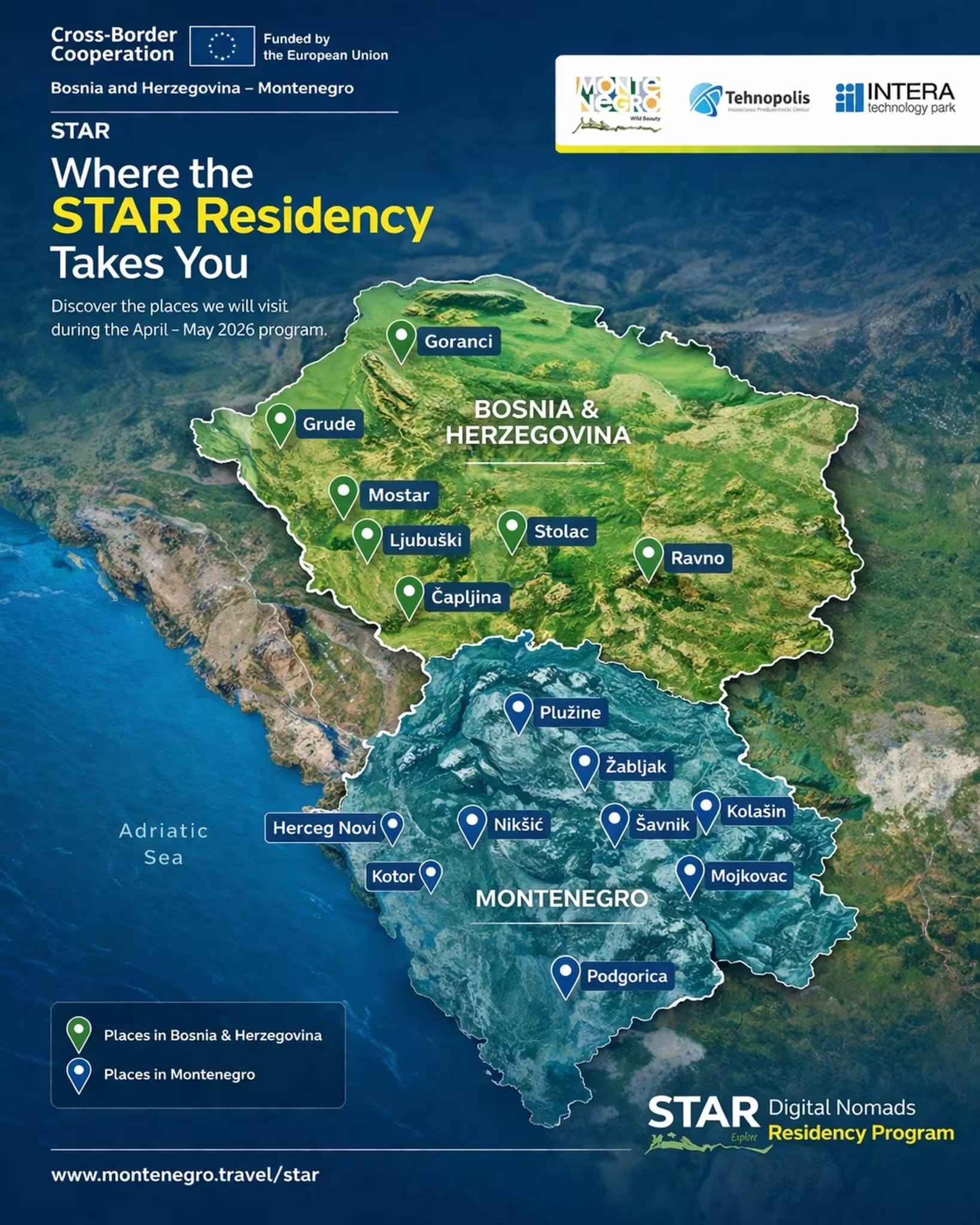
The itinerary took them through a wide arc of the two countries: Podgorica, Kolašin, Žabljak, Mojkovac, Šavnik, Plužine, Nikšić, Herceg Novi and Kotor in Montenegro, and Ravno, Stolac, Čapljina, Ljubuški, Mostar and Grude in Bosnia and Herzegovina. The goal was not conventional tourism but something closer to immersion — staying long enough in each place to move beyond the surface, to work alongside locals, to test whether these regions could sustain a different kind of visitor.
Participants are selected based on the reach and quality of their social media presence, along with their activity in digital nomad communities. The expectation is that they actively promote the region through their channels. Accommodation and meals are covered for the month.
The program is run by INTERA Technology Park in partnership with the Innovation and Entrepreneurship Center Tehnopolis and the National Tourism Organisation of Montenegro.
The participants' take
Michael Cohen described the value of slowing down across unfamiliar terrain. Moving at a measured pace, he said, cuts through the usual distractions and allows for a more genuine engagement with each place.
Simon Lewis noted that Bosnia and Herzegovina exceeded his expectations. The combination of mountain views during working hours and historic towns in the evening, he argued, showed how naturally remote work and travel can coexist in the region.
Nesen Yucel pointed to something less tangible but equally important. Some destinations linger in the memory not because of their landscapes but because of the people and the feeling they leave behind. She said Herzegovina offered both.
The role of coworking spaces
Coworking hubs played a central part in the residency. CODE Hub in Nikšić and Mostar provided not just stable workspaces but also points of contact between the visiting professionals and local creative and startup communities. These exchanges — knowledge-sharing, networking, collaboration — are precisely the kind of infrastructure that can turn a short visit into a longer relationship.
The project has also been running training programs for local tourism operators, teaching them how to market to digital nomads and adapt their services. The aim is to build lasting capacity, not just run a one-off program.
What the region stands to gain
The STAR Residency demonstrated that Bosnia and Montenegro have more to offer than the typical tourist experience. The advantages are clear: authentic local encounters, diverse natural landscapes, a growing network of coworking spaces, and conditions that make longer stays viable. Combined with the cultural and gastronomic offerings, these factors position the region as a potential destination for a new kind of traveller — one who works while moving, who stays longer, who engages more deeply.
The program's completion confirms a growing interest in the Balkans among international digital nomads. Bosnia and Montenegro are increasingly being seen as places where work, travel, and local life can coexist without sacrificing either productivity or authenticity.
Whether this translates into a lasting shift remains to be seen. But the STAR Residency has made a case worth considering.
← Back to home